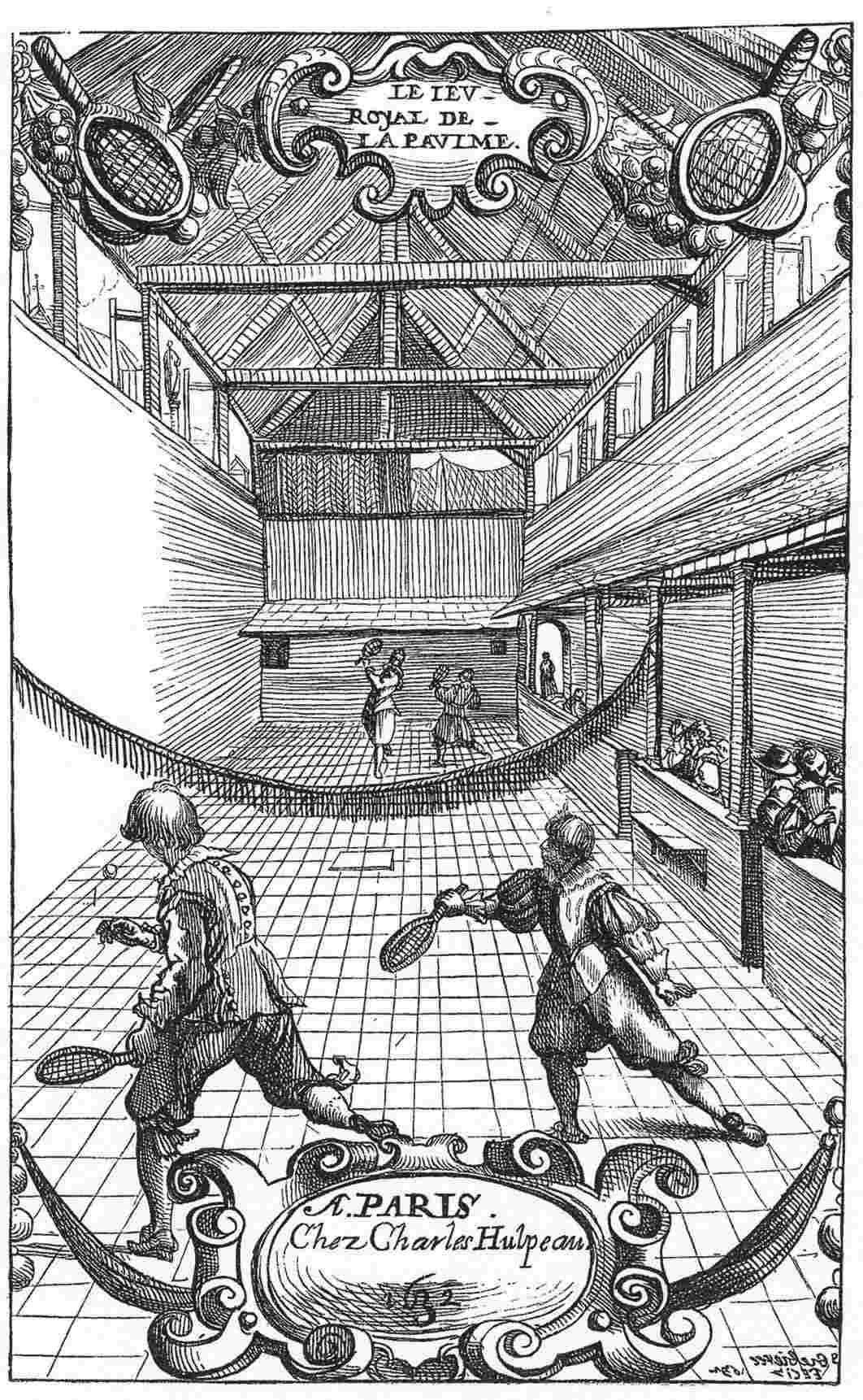
The Enigmatic Origins of "Tennis": A Journey into French Etymology
Many sports boast names that are immediately intuitive, descriptive reflections of the game itself. Think of
baseball, a clear combination of its core elements, or
basketball, similarly transparent. Even endurance sports like
swimming or
running are derived directly from the actions they represent. Yet, when we consider the word "tennis," its origins are far from obvious, sparking centuries of debate among linguists and historians. To truly understand this global phenomenon, we must journey back to 12th-century France, where a rudimentary handball game laid the foundation for the sophisticated sport we know today, revealing a captivating tale of linguistic evolution and historical mystery.
From Medieval Monasteries to Royal Courts: The Birth of Jeu de Paume
Long before racquets and nets became standard, the game that would eventually evolve into tennis was known in France as
jeu de paume, literally "the game played with the palm of the hand." This medieval sport was less about athletic prowess and more about strategic handball, popularized by monks and abbots within the covered walkways of monasteries – the cloisters. Early
jeu de paume featured no sophisticated equipment; players simply used their bare hands, or sometimes gloved hands, to bat a ball against walls or over a central line.
This nascent game developed organically within the confines of monastic life, its rules and implements gradually evolving over generations of "back-and-forth." While it lacked the modern fanfare,
jeu de paume was incredibly popular, eventually spreading beyond monasteries to become a favorite pastime of the French aristocracy and even royalty. Indeed, the French referred to this game exclusively as
jeu de paume right up until the late 19th century, when modern "lawn tennis" began to emerge. This long-standing nomenclature presents a significant puzzle for etymologists seeking the root of the word "tennis."
Tenez: The "Take Heed" Hypothesis and Its Challenges
The most widely accepted, though still debated, theory regarding the etymology of "tennis" traces its lineage to the French imperative
tenez, meaning "hold," "take," or more colloquially, "take heed" or "receive." This idea was first proposed in 1617 by linguist John Minsheu and has been supported by the Oxford English Dictionary. The hypothesis suggests that during medieval matches, particularly in 12th-century France, servers would call out "tenez!" as a warning to their opponents before putting the ball into play. It was a verbal ritual, a fair caution to prepare for the point.
As the game spread across the English Channel, English speakers are presumed to have adopted both the game and this distinctive utterance. Over time, this French exclamation, migrating into common usage, became anglicized. The earliest known written record of the word in English, dating back to around 1400, appears as "te'netz," offering a compelling phonetic link to the French "tenez." This linguistic migration from a server's cry to the name of the sport itself paints a vivid picture of how language can adapt and transform through cultural exchange.
However, the compelling nature of Minsheu's claim is tempered by a significant historical challenge. If "tenez" was such a common vocalization during matches, why has no mention of it ever been found in French literature or historical records pertaining to
jeu de paume? French players consistently referred to their game as
jeu de paume, never "tenez." This absence of direct evidence has led many linguists to question the validity of the "tenez" hypothesis, fueling an ongoing academic debate. For a deeper dive into these fascinating linguistic puzzles, explore
The Enigma of Tennis: Debating Its Ancient Word Origins.
Beyond Tenez: Alternative Etymologies and the Inductive Challenge
In light of the missing French corroboration for "tenez," a number of linguists have proposed alternative etymologies for the word "tennis." One intriguing theory suggests Arabic origins, linking the game's name to the ancient sunken city of Tinnis in the Nile Delta. This city was renowned for its high-quality fabrics, which some speculate could have been used to stuff the balls in early versions of the game. Another theory points to an old German word, though the specifics are less documented.
These alternative hypotheses highlight the inherent challenges in tracing the definitive roots of words, especially those from centuries past. Like making predictions about unlikely events, as discussed in the principles of inductive reasoning, establishing 99%+ confidence in etymological claims requires meticulous evidence. Without direct, irrefutable documentation, etymologists must often rely on circumstantial evidence, phonetic similarities, and historical context, piecing together a probable narrative rather than a concrete truth. The lack of explicit models for ancient linguistic shifts means we often draw generalizations from historical data, which, while necessary for everyday reasoning, requires greater caution when seeking absolute certainty.
The Enduring Legacy: How French Roots Shaped Modern Tennis
Despite the ongoing linguistic debate, the profound influence of French culture on tennis is undeniable. From the fundamental scoring system, where "love" is believed to derive from the French word
l'oeuf (egg), symbolizing a zero, to court dimensions and strategic play, the echoes of
jeu de paume resonate throughout the modern game. The very act of playing tennis, with its emphasis on skill, strategy, and etiquette, carries a legacy directly inherited from its aristocratic French ancestors.
Today, when we
refer to tennis, we’re often celebrating a sport rich in tradition, global appeal, and a compelling history. The journey from a simple handball game in medieval cloisters to the grand slam events of today is a testament to its enduring charm. Understanding this deep historical context not only enriches our appreciation for the sport but also connects us to a continuous lineage of play stretching back hundreds of years.
For individuals and clubs looking to cultivate this rich heritage and expand the sport's reach, understanding player engagement and community building is crucial. Just as
jeu de paume spread through word-of-mouth and cultural adoption in centuries past, modern growth often hinges on enthusiastic players introducing others to the game. Implementing strategies to encourage existing members to
Drive Growth: Implementing a Free Tennis Referral Program can be a powerful way to honor this tradition of sharing the joy of tennis, ensuring its continued vitality and growth for future generations.
In conclusion, whether the word "tennis" truly sprang from a server's cry of "tenez" or from a more obscure linguistic pathway, its French roots are deeply embedded in its DNA. The transformation from
jeu de paume to the global spectacle we witness today is a remarkable story of cultural evolution, linguistic mystery, and enduring passion. The debates surrounding its etymology only add to the sport's fascinating allure, reminding us that even the most common words can hold centuries of captivating history within their syllables.